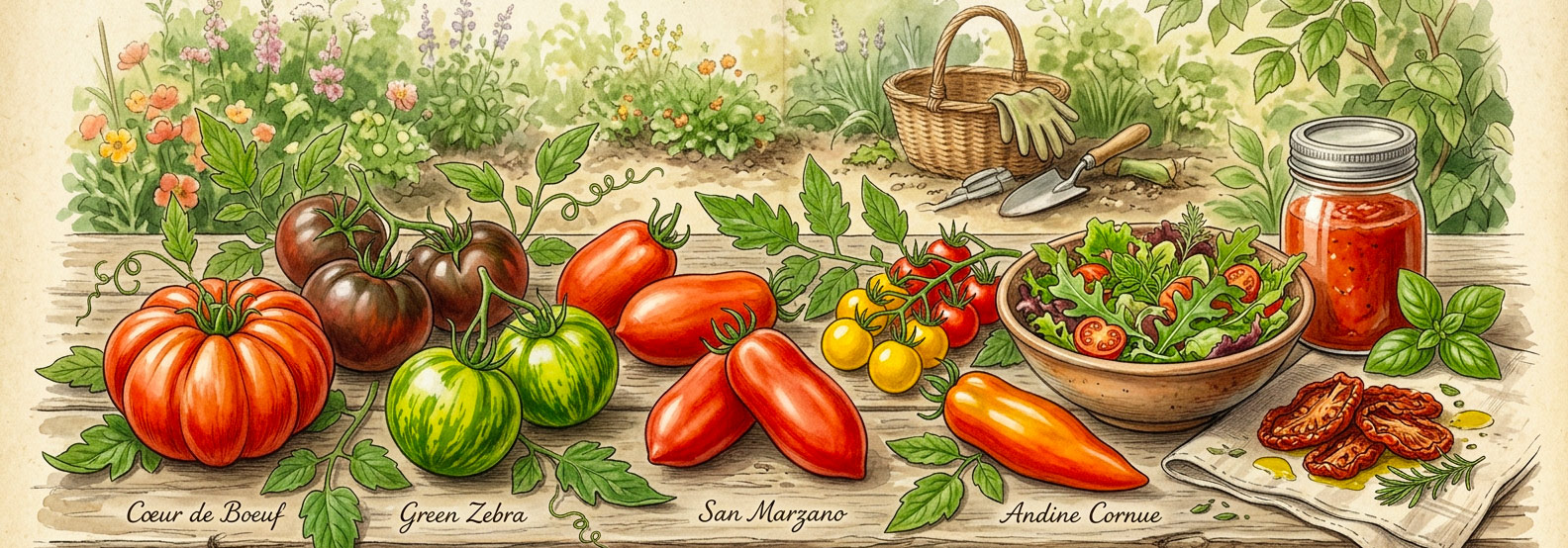
At my place, once the melons and courgettes came out, I put in two tomato plants that had come up on their own in the vegetable patch, probably from seeds that passed through the compost. Will they have time to produce before the cold? We'll see.
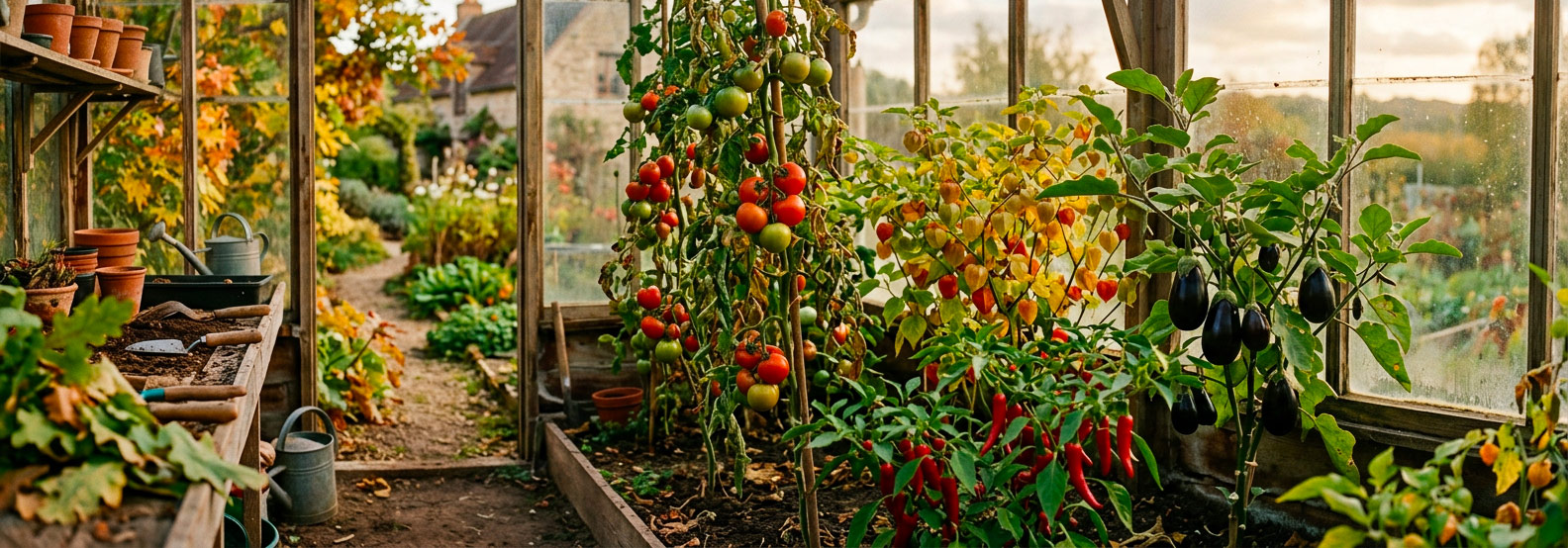
I still have aubergines in pots that never flowered all summer, my Espelette chillies and my cape gooseberry. That last one, I no longer know what to do with.
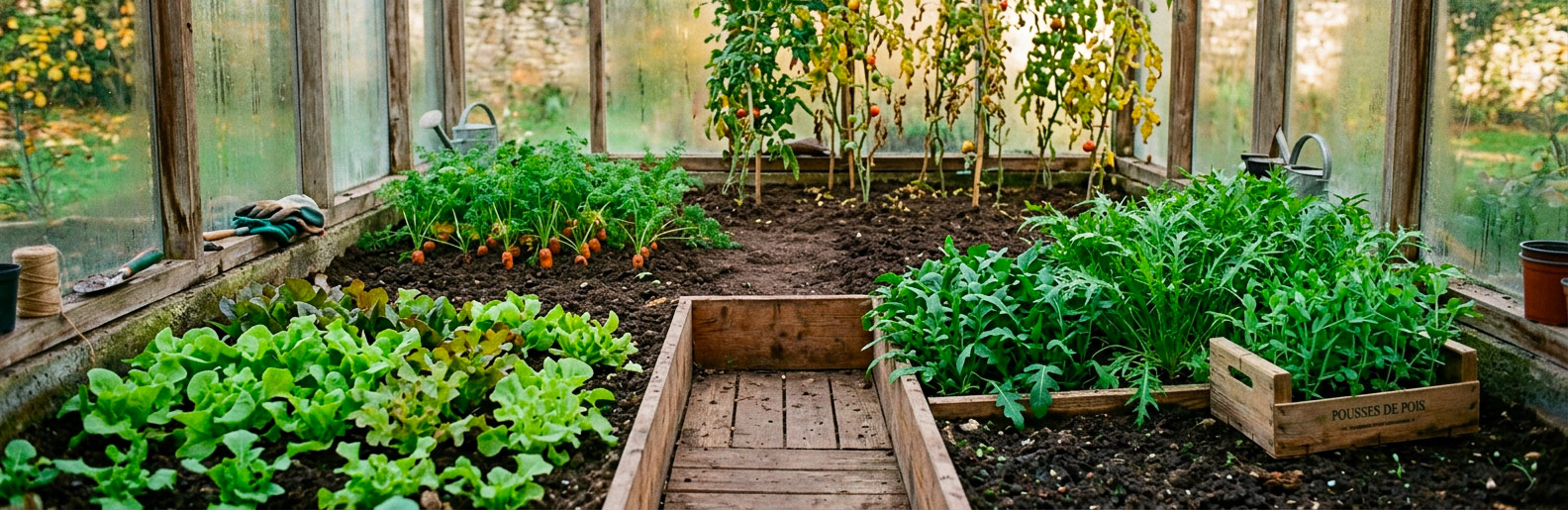
Which raises a question: what can you still plant in an unheated greenhouse to keep harvesting through autumn, and, let's be bold, into early winter?
Extending the summer crops
This is the greenhouse's first use in autumn: keeping the plants already in place so you can enjoy their last harvests.
Tomatoes, peppers, chillies and aubergines can keep producing as long as temperatures stay mild enough. Cucumbers that are still vigorous can give a few extra fruits too.
Extending a crop isn't the same as starting one over, though. Planting young aubergines or sowing cucumbers in late September in an unheated greenhouse leaves far too little time for a worthwhile harvest before winter. So that one, we forget.
My volunteer tomatoes are an experiment: they'll make the most of the greenhouse's warmth for as long as there is any. And between us, after the summer we've just had, you rather feel it will never be cold again.
Short carrots under glass
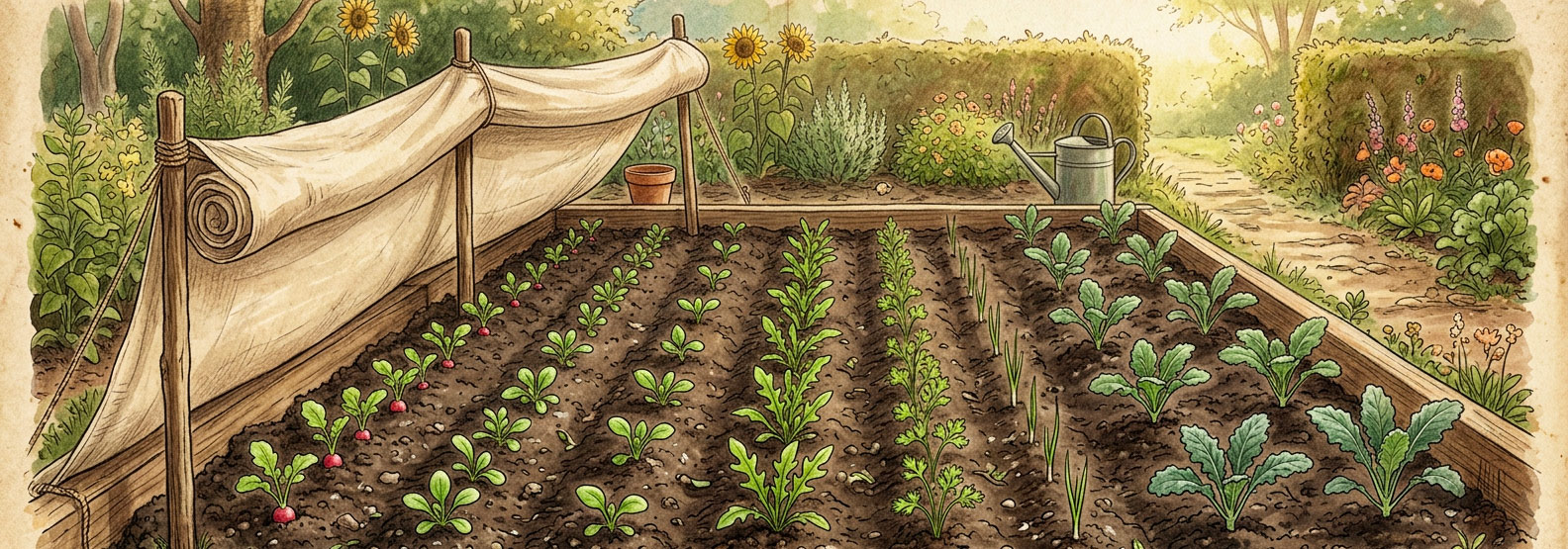
Carrots grow perfectly well outdoors. But under glass, certain short varieties can be grown to extend the harvest when the outdoor beds get too wet or too difficult to work.
Choose short varieties, or ones meant to be pulled young. Sow directly into loose soil, without adding fresh manure, and keep the moisture up until they germinate.
Cut-and-come-again salads: making small spaces pay
The greenhouse also lets you produce a few fresh leaves when the outdoor garden slows down.
I'd favour crops that take up little room and give several small harvests:
- rocket;
- mizuna and other Asian mustards;
- cutting lettuces;
- young spinach leaves;
- garden cress;
- corn salad and claytonia, the two hardiest on the list.
All of these will grow outdoors too. Their advantage under glass is mainly being sheltered from driving rain, light frosts and the weather that tears up leaves.
To get harvests through the coldest months, the plants are better off well established before the light drops off sharply. In midwinter, even under glass, growth can become almost imperceptible.
Pea shoots: a harvest without waiting for pods
We usually think of peas for their pods, but the young shoots are edible too. It's a useful crop for making the most of a small patch of greenhouse.
Sow edible peas in a tray or a reasonably deep box, then pick the tender young shoots once they're well developed. There's no need to wait for flowering or for pods to form.
That way you get a small harvest of greenery without tying up a large bed for months.
Herbs: extending the harvest of the tender ones
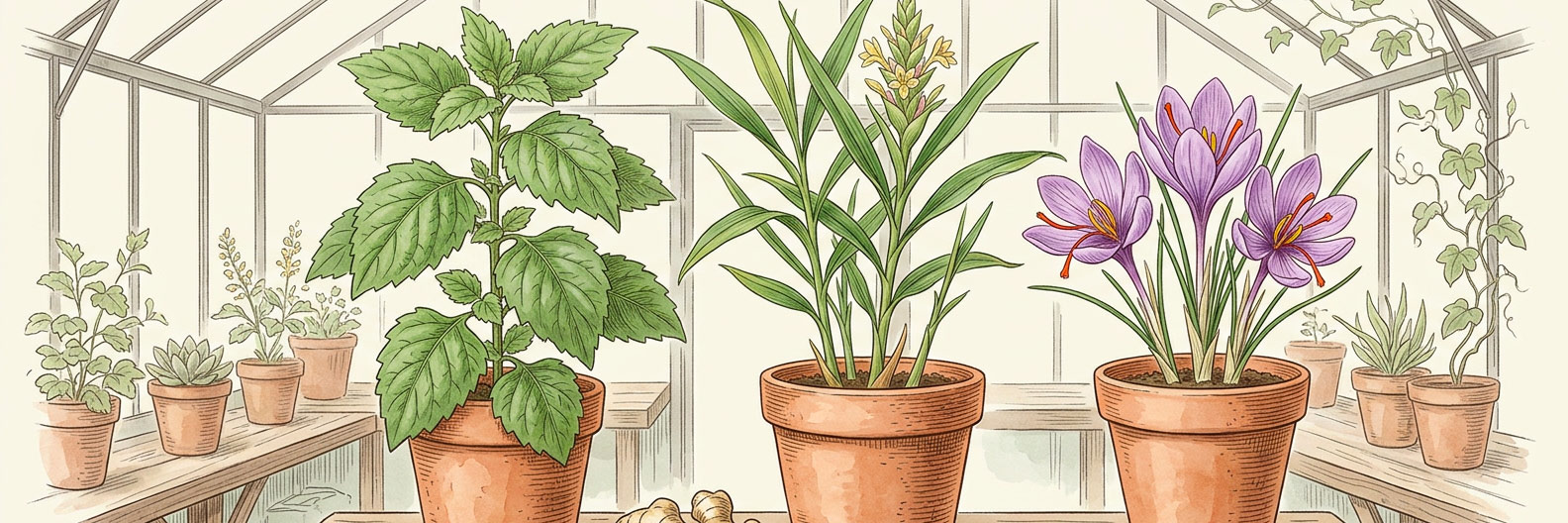
Basil can keep producing a few leaves as long as temperatures stay mild. Lemongrass and some other cold-sensitive herbs can also benefit from the greenhouse in early autumn.
A word of caution
An unheated greenhouse is not a frost-free space. Parsley, chives and other hardy herbs can certainly be grown there, but they don't necessarily need the greenhouse to get through winter.
Radishes, turnips and beetroot: three roots worth trying
Radishes are perfect for quickly filling a space that's opened up in the greenhouse. Sown directly into the soil, they can still give good harvests in autumn, as long as you keep the ground moist.
Turnips, particularly early varieties or ones meant to be pulled young, can also use the shelter to carry on growing as temperatures fall.
As for beetroot, a late September sowing is already too late to hope for big roots before winter. But you can still try for small beets and tender leaves. The experiment is worth making.
In all three cases, the greenhouse shelters from the weather but doesn't make up for the lack of light: the further into autumn you go, the slower the growth.
An unusual idea: new potatoes for Christmas
What if you used the greenhouse to harvest a few new potatoes in midwinter?
The method is to plant potatoes in pots or large containers at the end of summer, then grow them under cover. To hope for a harvest around Christmas, planting happens in late August or the very start of September.
One condition is essential: keeping the plants frost-free. Potatoes can survive certain low temperatures underground, but their foliage is sensitive to frost. An unheated greenhouse isn't always enough to protect them on the coldest nights.
So it's an unusual crop to try when you have a well-sheltered greenhouse, possibly with a bit of backup heating or extra protection. And above all, a good idea to plan for at the end of next summer.
And the cape gooseberry?
Since I said I no longer knew what to do with it, I may as well answer here.
The cape gooseberry, or physalis, is a perennial in mild climates. Cut back and left under glass, it can come away again the following spring and produce far faster than a seedling. That's probably what I'll try.
In the kitchen, the fruits keep for several weeks in their papery husks, can be eaten raw, or end up as jam, as a sharp compote alongside meat, or even dried like raisins.
In other words, it wasn't the problem. It was just me not having planned anything.
Cleaning the greenhouse, the job everyone forgets
Autumn is the time to wash the glass.
This isn't cosmetic. Panes grimy after a summer can hold back a meaningful share of the light, precisely at the point in the year when light becomes scarce. It's probably the best effort-to-result job of the whole season.
While you're at it, clear away plant debris at ground level, where slugs and aphids are happy to overwinter, and check the corners and the structure.
What an unheated greenhouse cannot do
A greenhouse stores heat during the day and shelters plants from wind and some of the weather. But it doesn't turn autumn into a permanent summer.
As the days shorten, two things end up limiting growth: temperature and light.
Even when the greenhouse stays reasonably mild by day, the nights can turn very cold. And in December, plants have far less light energy available to grow with. Which is why summer crops eventually stop, and winter vegetables grow much more slowly.
"An unheated greenhouse mainly widens the season at both ends: extending the summer harvest, and sowing or planting earlier in spring."
For summer vegetables all year round, you need an entirely different setup.
Three habits for using the greenhouse well in autumn
- Keep ventilating. A greenhouse kept permanently shut can build up a great deal of condensation. Use the mild days to change the air and limit excess humidity around the plants.
- Adjust the watering. As temperatures and light fall, water needs drop. Check the soil before watering rather than automatically keeping to the summer rhythm.
- Gradually remove the shading. Shade netting that was useful in August becomes a hindrance as the days shorten. In autumn, plants need all the light they can get.
So what am I planting in my greenhouse this autumn?
For now, I'm mostly going to make the most of what's already in there.
My aubergines, my chillies and my cape gooseberry can still give me a few fruits, and I'm curious to see what becomes of the volunteer tomatoes. The ginger will enjoy the remaining warmth while I decide how to protect it from the cold.
As the first spaces free up, I can put in some cutting salads, pea shoots, a few radishes, or try a small crop of carrots.
And as for the Christmas new potatoes, I'm keeping the idea for next year: this time I should have started rather earlier.
In the end, that may be the greenhouse's real role in autumn. It mainly lets you stretch out the crops that haven't finished their season, then gradually use the space they free up to keep harvesting.
And if my volunteer tomatoes decide to produce in November after all, I certainly won't stop them.