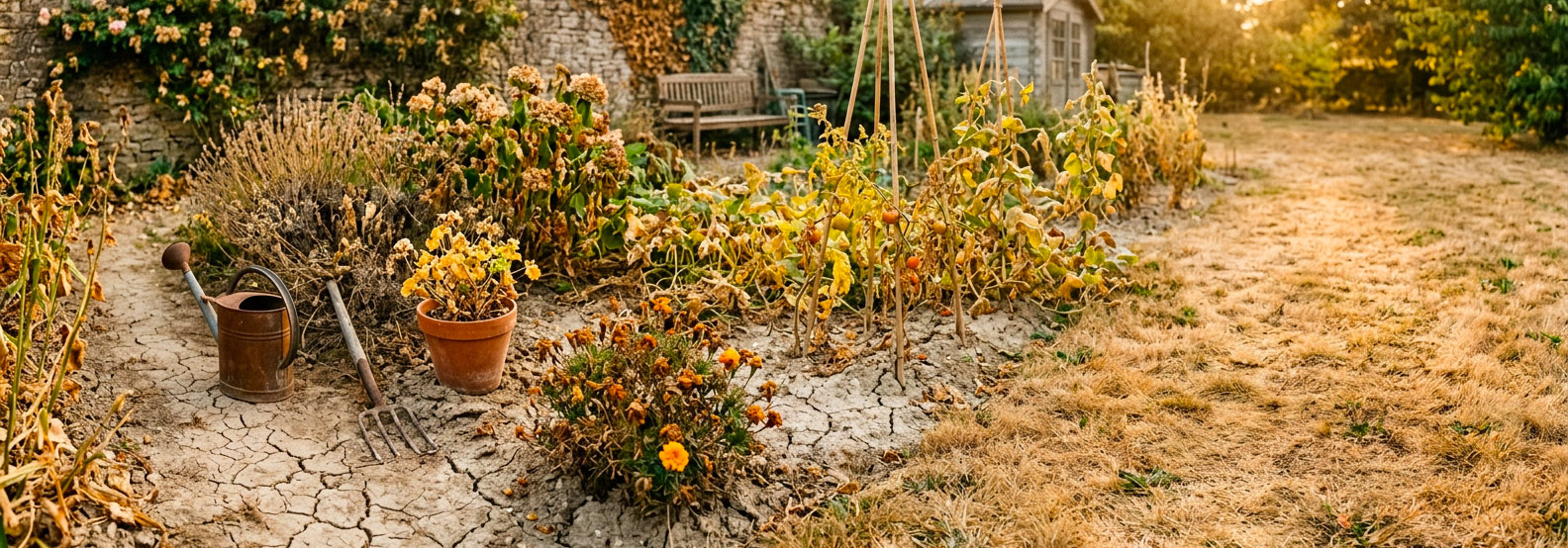
By the end of summer, some gardens look decidedly rough. Yellow lawn, scorched leaves, tired borders, soil as hard as concrete... after several weeks of heat, the urge to pull it all out comes on fast.
It isn't the best idea. Before autumn, the most useful thing is to sort out what has genuinely died, what can still come back, and what deserves rethinking for next year.
Don't pull things out too quickly
A plant with scorched foliage isn't necessarily dead. After serious heat stress, some plants drop part of their leaves or slow right down without being finished.
Before reaching for the spade, look at:
- whether the stems are still supple;
- whether the wood is still green under the bark;
- whether any buds are still alive;
- whether new shoots are appearing at the base.
The bark test
On shrubs and woody plants, scratch a stem's bark very lightly: if the tissue underneath is still green, the plant is alive. Better to wait a while before pronouncing it dead.
Work out which areas suffered most
A very hot summer is also an excellent way of exposing a garden's weak points. Some areas scorch every single time. Others stay surprisingly cool. Some borders want water constantly while others cope almost alone.
And heat doesn't only reveal what's going wrong. It also shows what works. A plant that comes through weeks of heat with little help is probably well suited to where it stands.
Conversely, if a plant needs constant watering every summer simply to survive, it may be worth asking whether it's really in the right place.
Water less often, but better
After a heatwave, the reflex is often to water a little every day. For established plants, it's better to water more generously and less frequently so the water actually gets into the soil. A shallow watering mostly dampens the top few centimetres.
But this rule isn't universal. Plants in pots, young plantings and recent sowings have few reserves and need far closer attention. So you adapt the watering to the plant and the soil, rather than following a fixed schedule.
Prioritise what's hard to replace
When everything is struggling at once, you sometimes have to choose. An annual border or a lawn can be redone fairly quickly. A tree that's been in place for fifteen years, far less so.
In dry spells, established trees, shrubs and fruit trees deserve particular attention. And if autumn stays dry, don't automatically assume watering season is over simply because September has arrived.
Don't prune hard right after the heat
A plant already under stress doesn't necessarily need a heavy prune on top of it. Remove what's clearly dead, broken or diseased, but hold off on major cutting until the plant has shown real signs of recovery.
The same goes for fertiliser. A parched plant doesn't need to be ordered to produce a fresh flush of growth immediately. First it recovers. Then you step in.
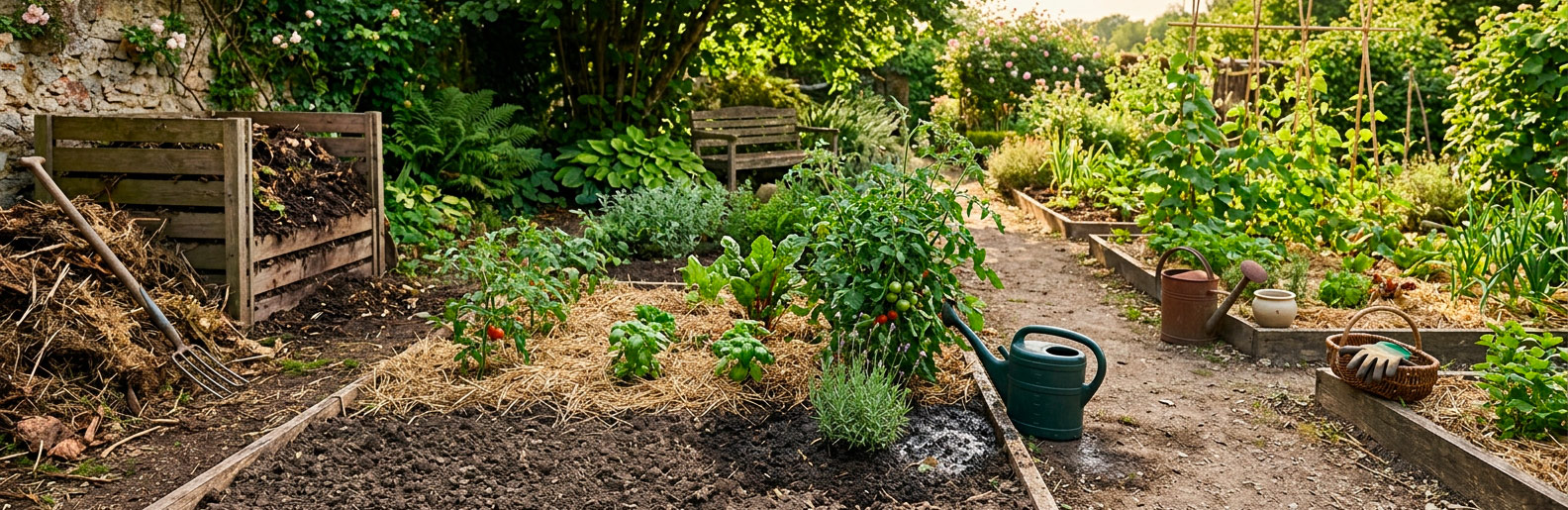
Use autumn to improve the soil
This is probably one of the most useful jobs of all. Soil that's badly compacted or low in organic matter takes up water less readily and can dry out fast at the surface.
So in autumn you can:
- loosen the most compacted areas;
- add compost or well-rotted organic matter;
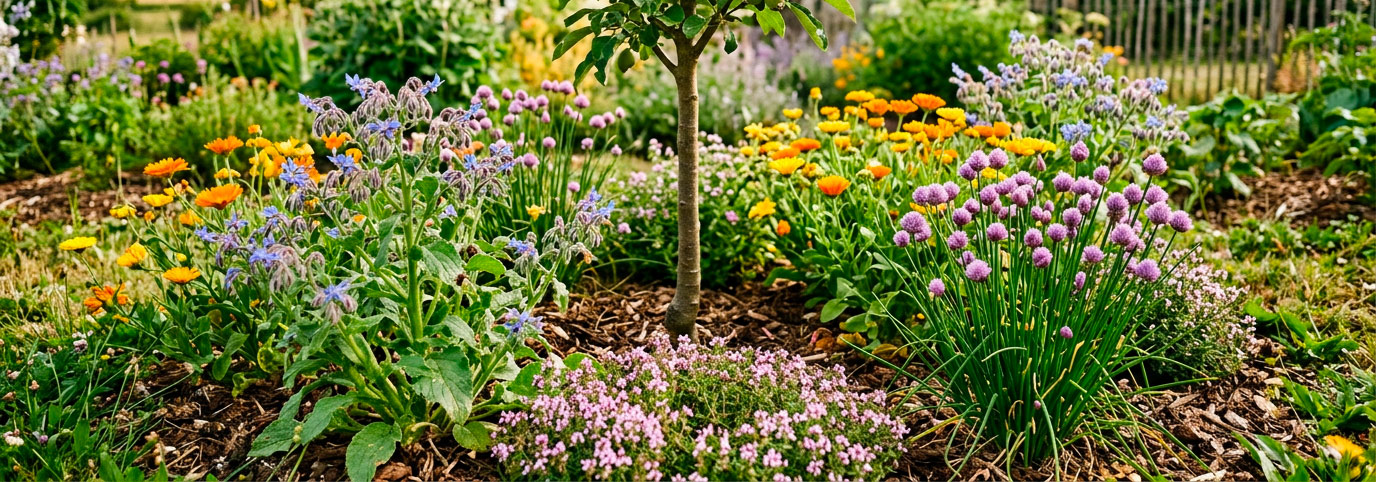
- mulch;
- keep more of the soil covered;
- avoid leaving large areas needlessly bare.
The aim is simple: get water into the soil and keep it there longer. Mulch helps limit evaporation and temperature swings.
Autumn is also the right time to replant
For many shrubs, trees and hardy perennials, autumn offers very favourable conditions. The air turns cooler, evaporation drops and the soil is still relatively warm.
Roots can start establishing before winter, then benefit from several extra months before the heat returns. If your garden needs to change to handle future summers better, a good deal of that work happens in autumn.
Gradually replace the thirstiest plants
If a plant struggles every year despite regular care, you may have to accept that it simply isn't suited to that spot. Rather than redoing the whole garden, you can gradually swap the most demanding plants for species better matched to your ground and local climate.
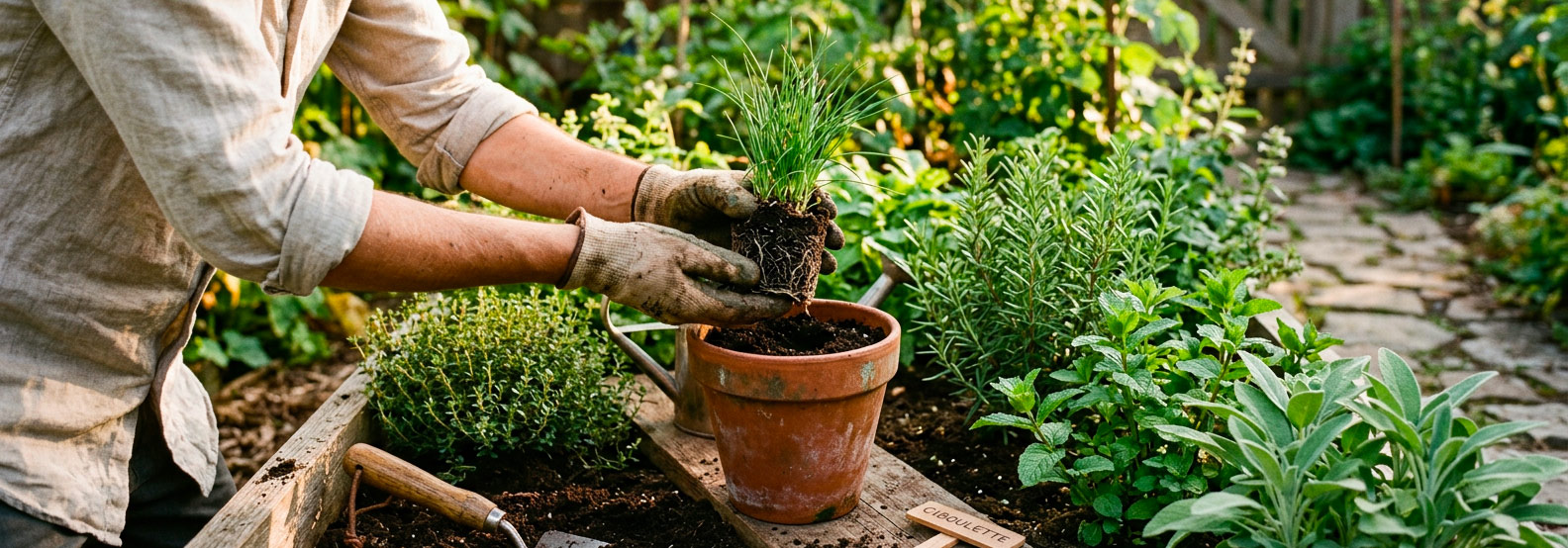
Depending on the situation, lavender, thyme, rosemary, sage or certain ornamental grasses can be worth considering.
"Choose a plant because it genuinely copes with your garden's conditions, not just because it caught your eye at the nursery."
Create shade where it's missing
Summer shows very quickly which areas literally bake in the sun. A few degrees less can change a great deal.
Trees, shrubs, hedges, planted pergolas, climbers or even shade netting over parts of the vegetable garden can protect crops and slow the soil from drying out. Shade becomes almost a resource in its own right. And September is an excellent moment to note where it's lacking.
Think about capturing water
Autumn is also when you prepare for the next dry season. Installing or expanding rainwater collection is one obvious route. But it's just as useful to watch how water moves through the garden.
Where does it run off after heavy rain? Where does it pool? Where does it vanish immediately? Sometimes improving water management is less about adding more of it than about stopping it leaving the ground so fast.
What the heatwave teaches you about your garden
- Always scorched in the same spot? The aspect or the soil probably needs rethinking.
- Some plants cope almost unaided? They're probably well suited to where they stand.
- Water runs off instead of soaking in? Look at compaction and soil structure.
- Pots drying out within hours? A larger container, grouping the pots together or more shade can all help.
- One border constantly demanding water? It may be time to gradually rethink the species growing there.