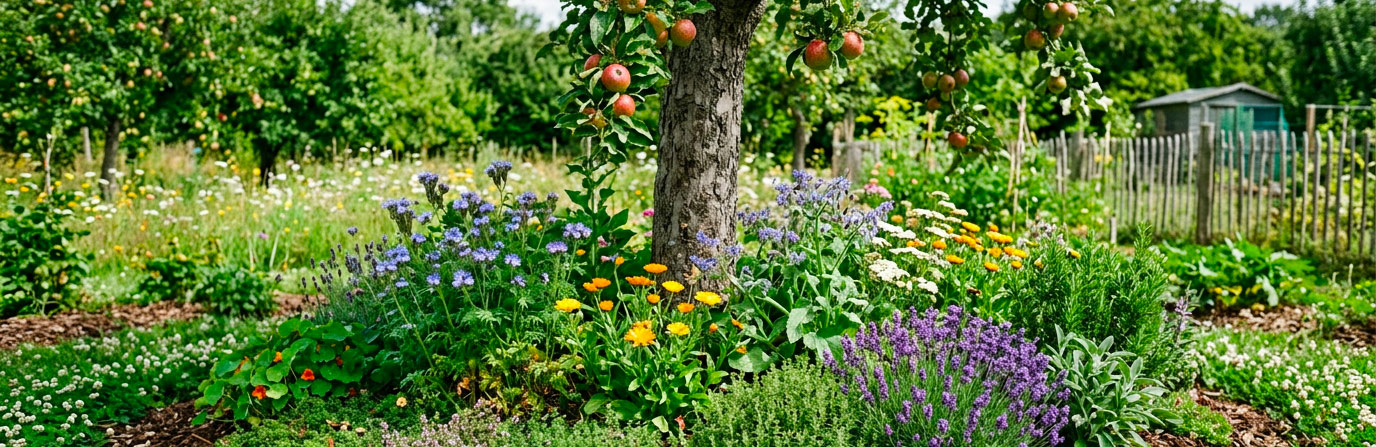
Planting a fruit tree isn't just about digging a hole and waiting for the harvest. In nature, a tree rarely grows alone. At its base live flowers, perennials, herbs and a whole range of small creatures that contribute to the balance of the environment. The gardener can draw inspiration from this to create a more vibrant space around their fruit trees.
Why not just leave the grass?
Grass isn't bad in itself. But it competes with a young tree for water and nutrients. In the early years, this competition can slow down the development of the root system. That's why many growers prefer to maintain a cleared circle around the trunk, often mulched.
Flowers attract pollinators
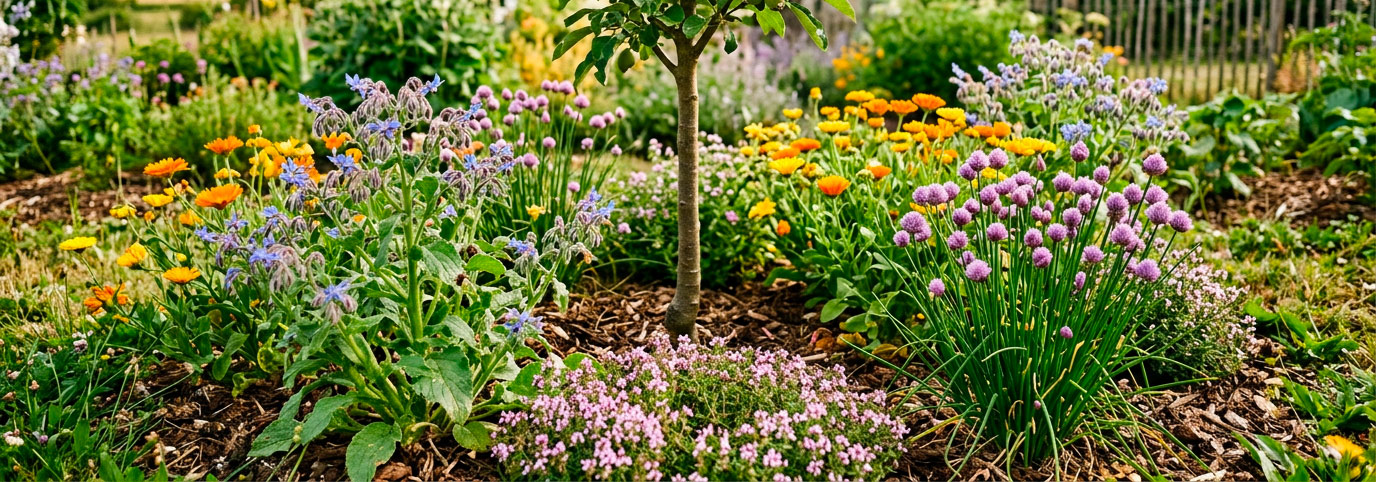
A fruit tree often depends on insects for good fruit set. By planting flowers nearby, you increase the chances of attracting bees, bumblebees and other pollinators. Easy species to grow include:
- borage
- calendula
- cosmos
- phacelia
- nasturtium
- cornflower
These flowers add colour while supporting orchard life.
Good to know
Phacelia is particularly effective at attracting pollinators. It flowers quickly, self-seeds easily, and can be used as a green manure at the end of the season.
Herbs make excellent neighbours
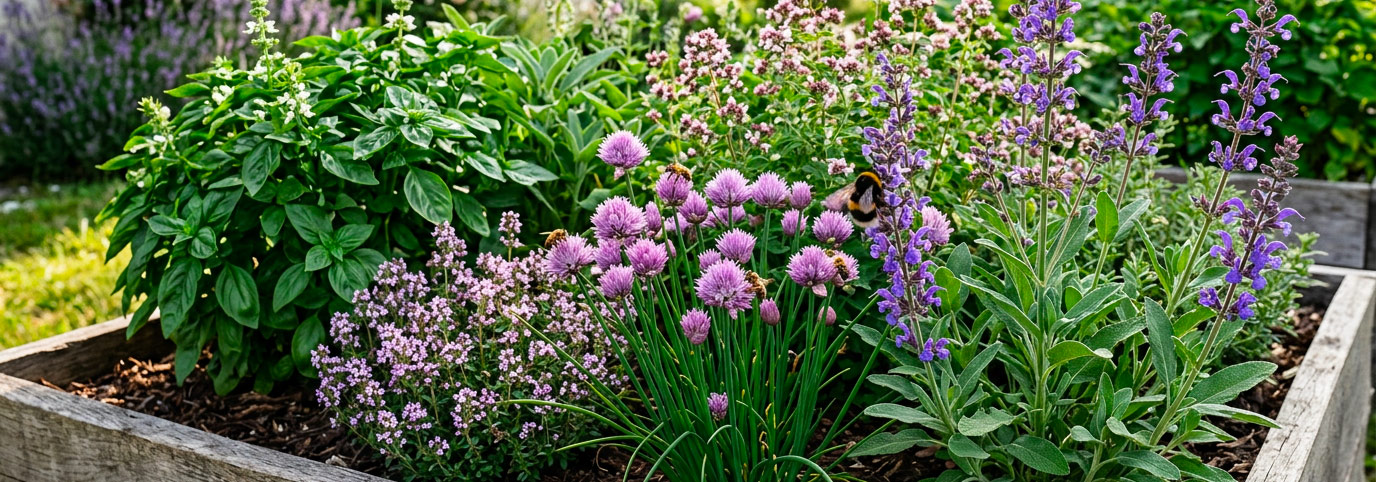
Some herbs naturally find their place beneath trees. Thyme, oregano, chives and marjoram take up little space and produce flowers that insects love. As a bonus, they're useful in the kitchen. This is often one of the simplest associations to put in place.
Ground cover plants reduce maintenance
Bare soil dries out quickly and encourages weed germination. Ground cover plants protect the soil while reducing work. Depending on climate and available space, good options include:
- strawberries
- comfrey
- white clover
- low-growing perennials
Their presence also helps retain more moisture during summer.
Bulbs make good use of early-season light
Daffodils, crocuses and grape hyacinths flower early in the season, making the most of the light before the tree develops its full canopy. Once their cycle is complete, they disappear almost entirely until the following year. A simple way to add colour without interfering with the tree.
Avoid strong competition
Not all plants make good neighbours. Vigorous or deep-rooted plants can compete with young trees. It's best to avoid turning the base of the fruit tree into an impenetrable thicket. The goal is to help the tree, not make life harder for it.
Worth avoiding
Deep-rooted or aggressive plants — such as comfrey in large quantities or invasive grasses — can cause problems around young trees. Worth monitoring during the first two or three years.
Start small
There's no need to create an instant food forest. A few flowers, a few herbs and a good layer of mulch are already enough to considerably improve the environment around a fruit tree. Over the years, the space can be gradually enriched based on observation and need. The tree then becomes not an isolated element in the garden, but the centre of a small living ecosystem.