Every morning, like you, I head out to the garden full of hope (often before my first coffee). And every morning, the same verdict: plenty of pretty yellow flowers, but still not the tiniest zucchini forming. So what's going on? Do we rip it all out and make fritters, or do we try to understand?
A perfectly normal gap
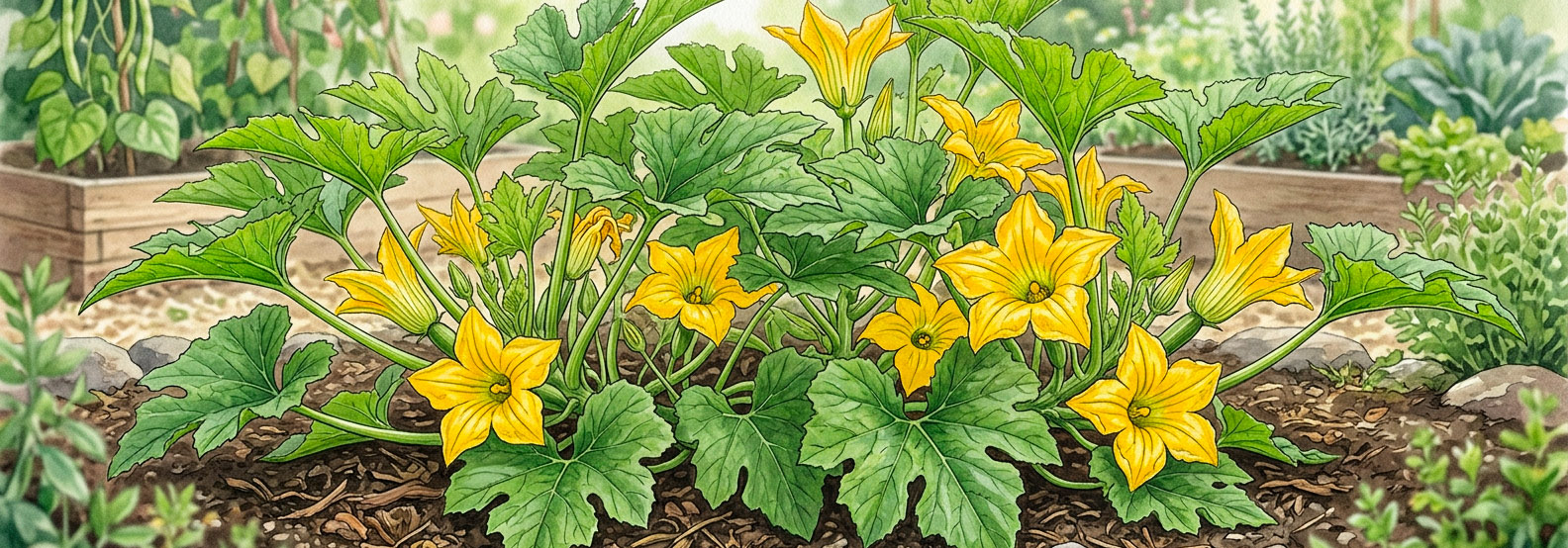
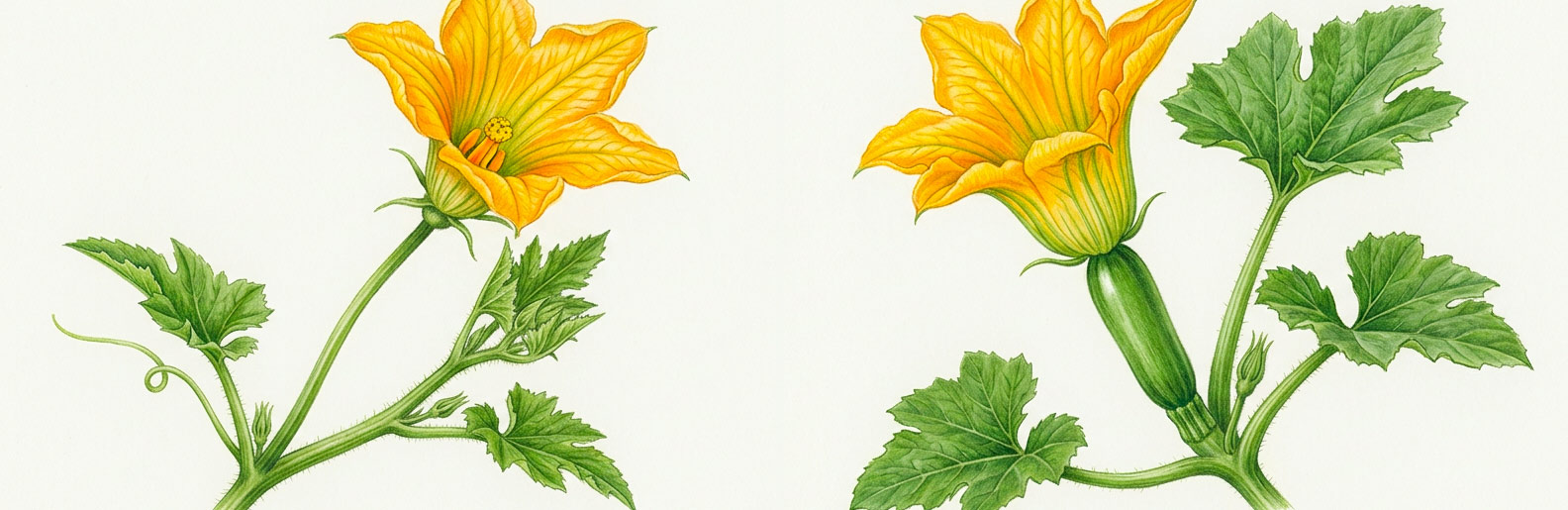
Zucchini (Cucurbita pepo) is what's called a monoecious plant: a single plant carries both male and female flowers, separately. Except nature is in no hurry. Male flowers almost always show up first, sometimes two to three weeks before the females. The plant warms up, produces pollen, attracts pollinators, all before it even has anything to fertilize.
Telling them apart isn't complicated:
- The male flower sits on a long, thin stem, with no swelling at the base, and stamens full of pollen inside.
- The female flower has a short, stocky stem, with a small swelling (the future zucchini in miniature) right below the flower.
As long as it doesn't last more than two or three weeks, just let it be: female flowers always end up showing up eventually.
If it drags on too long, here are the real culprits
Past that window, several factors can push the plant to keep stubbornly producing male flowers:
Heat and long summer days
This is the best-studied factor: hot, bright conditions delay female flowering and boost male flowering, while cool weather (especially at night) tips the balance the right way. Which explains why right now, the males are running the show.
Irregular watering
Too much, then nothing, then too much again: this water stress throws off the plant's hormonal balance and pushes it toward male flowers, which are cheaper for it to produce.
Too much nitrogen
Soil or fertilizer loaded with nitrogen favors leafy growth and male flowers. Conversely, a bit of phosphorus and potassium (good old wood ash) helps female flowers get going.
The variety itself
Some hybrids are bred to lean more male or more female. And even in classic heirloom varieties, nature plans generously: roughly five male flowers for every female one.
Good to know
Why this male privilege? It's a matter of timing. Each flower only opens for a few hours, on a single day. By spreading out plenty of male flowers across the season, the plant makes sure fresh pollen is almost always available on the day a female flower finally opens.
The small scientific detail that changes everything
In cucurbits, a plant hormone called ethylene largely decides the sex of the flowers. The more a flower bud produces, the more likely it is to become female. This is exactly what plant breeders have long relied on: treatments based on ethylene precursors make male flowers disappear, while inhibitors of that same hormone favor them.
"Heat, water stress and excess nitrogen all disrupt that very hormone. Which is why these three factors keep coming back into the equation."
What you can actually do about it
- Be patient for two to three weeks: it's the plant's normal cycle.
- Water regularly, at the base, early in the morning, without overdoing it or letting it dry out between waterings.
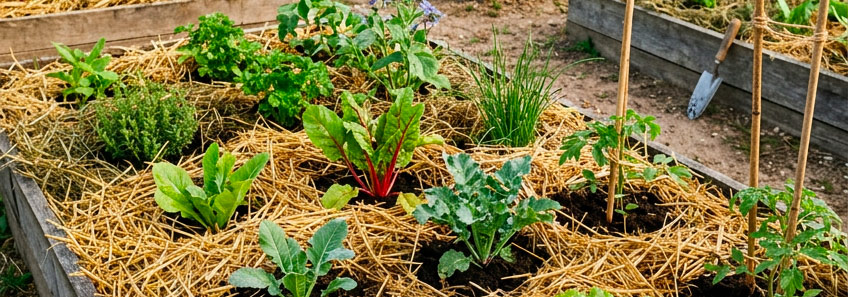
- Mulch to keep the soil cool and stable.
- Go easy on nitrogen, rely on well-matured compost, and add a little wood ash.
- Attract pollinators (borage, cosmos, lavender nearby) so that when the big day comes, pollination happens without delay.
Once the balance is restored, female flowers usually don't take much longer to show up. And with them, finally, the first zucchini. (Finally!)