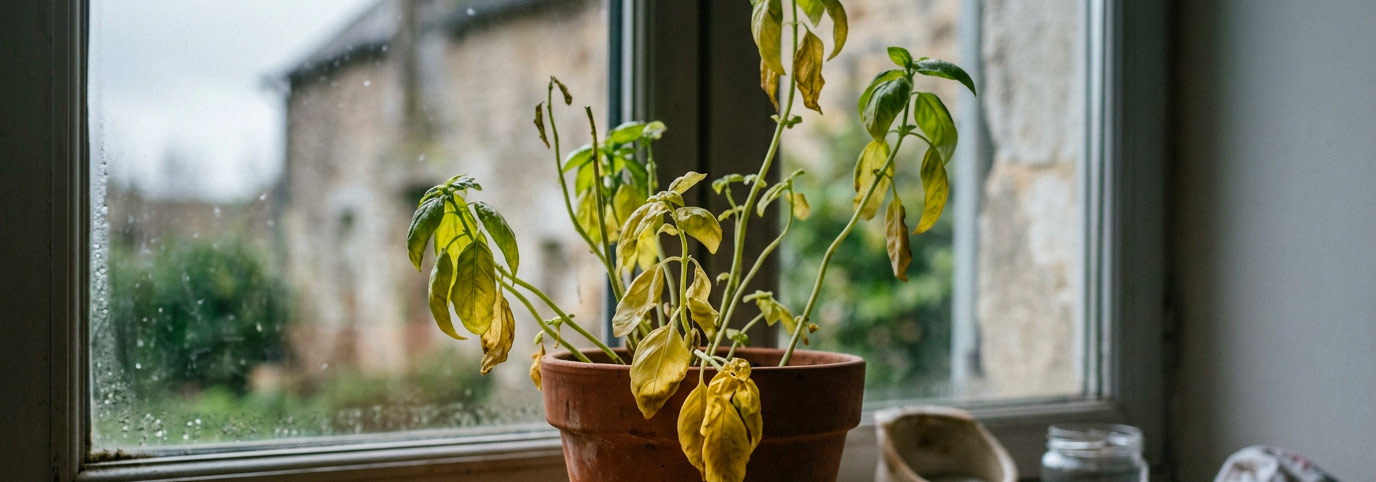
You buy a beautiful pot of basil. For a week it looks great. Two weeks later it's yellowing, leggy or completely collapsed. The good news: it's usually not your fault. Herbs sold in shops are often produced to be used up quickly, not to live for months.
Not enough light
The first cause of failure is lack of sun. A shelf at the back of the kitchen seems bright to our eyes, but it's often far from enough for a Mediterranean plant. Basil, thyme and oregano like several hours of direct light each day. Without it, stems stretch and leaves become sparse and pale.
Good to know
A south or south-west facing windowsill is ideal. If your kitchen is dark, move the herbs to a balcony or terrace as soon as night temperatures stay above 15°C.
Too much water
Many gardeners water frequently, thinking they're doing the right thing. But herb roots hate sitting in water. Permanently waterlogged compost promotes disease and root suffocation. A good thorough watering every few days is far better than a small amount every day. Wait until the top of the compost is dry before watering again.
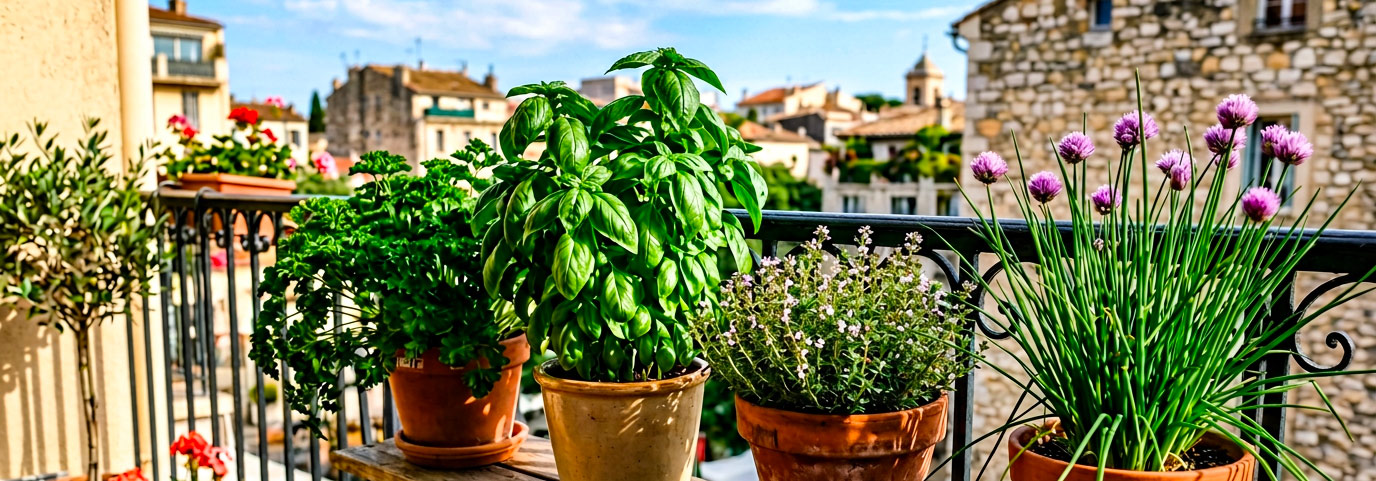
Pots that are too small
Herbs sold in supermarkets are often very overcrowded. Several dozen young plants may share the same container. After a few weeks, competition for water and nutrients becomes intense and the weakest plants give up. Repotting — ideally separating the plants into individual pots — can dramatically extend their lifespan.
Not all herbs are the same
Treating all plants the same way often leads to disappointment. Each species has its own preferences:
- basil loves warmth and is very sensitive to cold
- mint likes more moisture and tolerates partial shade
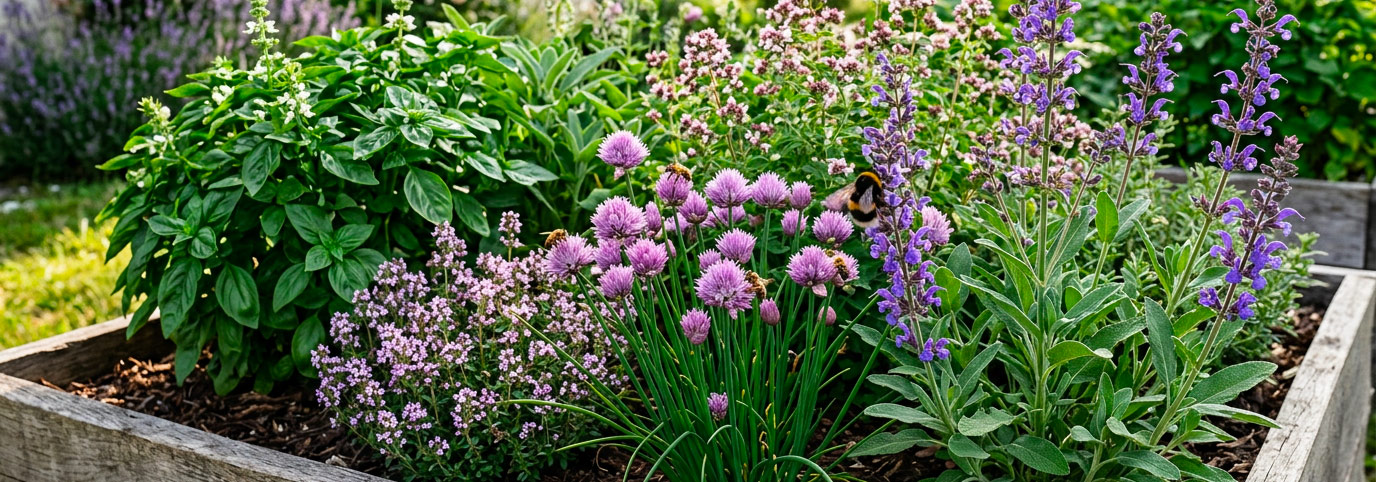
- thyme and oregano prefer fairly dry soil and plenty of sun
- chives tolerate regular watering and cooler temperatures
Watch out
Basil is particularly sensitive to cold. Below 12°C it blackens quickly. Never place it near a poorly insulated window in winter, and avoid putting it outside once the nights start to cool down.
The simplest solution
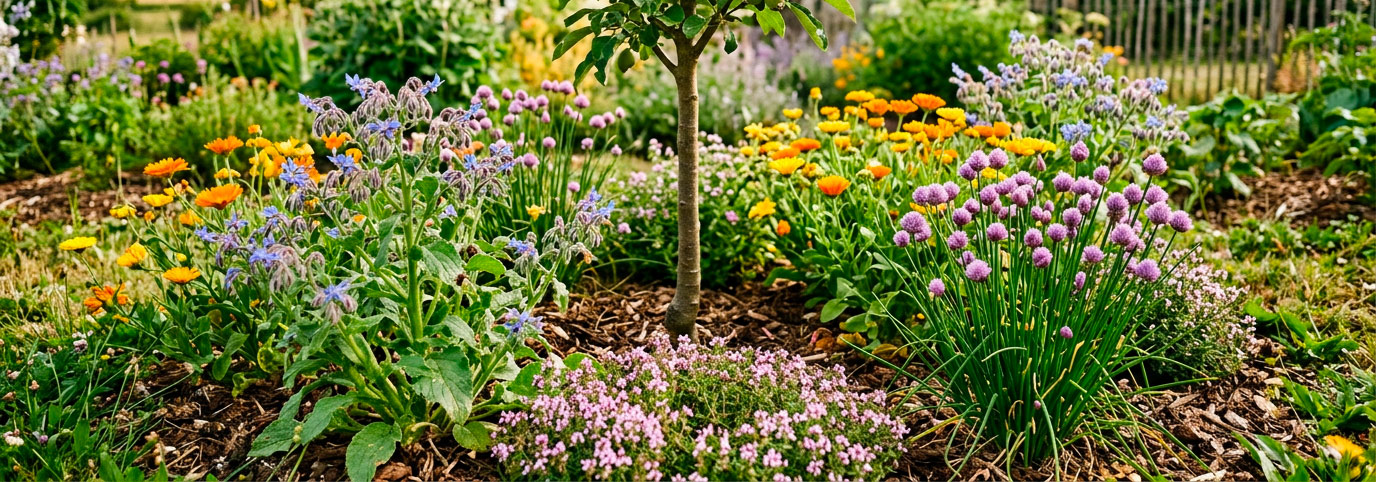
If you have a balcony, terrace or sunny windowsill, move your herbs there as soon as temperatures allow. Most behave far better outdoors than in a kitchen. Natural light, air circulation and temperature variation suit them much better than the enclosed atmosphere of a flat.
Key takeaways
Herbs rarely die from a lack of care. They die more often from lack of light, too much water or not enough space. A little sun, good drainage and a couple of repottings are often enough to turn a doomed plant into a genuine little supply of fresh herbs.