Rhubarb leaves aren't for eating, but they still have a job to do in the garden. Steeped in water, they make a spray traditionally used to keep aphids off young rose shoots and buds.
In spring, rose bushes finally cover themselves in new leaves and promising buds. Unfortunately, aphids usually notice just as quickly. Clustered around the tender tips, they suck the sap, distort young shoots, and sometimes leave a sticky residue behind. Before reaching for a store-bought product, take a look at your rhubarb patch: its big leaves, useless in the kitchen, can be recycled into a very simple garden spray.
Why rhubarb leaves?
Rhubarb leaves naturally contain compounds that make them unfit to eat. That same trait has made them a long-standing ingredient in homemade gardening recipes, particularly against aphids.
The idea is simple: the leaves steep in water, and the resulting liquid is strained and sprayed onto the infested parts of the rose bush. This traditional preparation is also known as a rhubarb leaf brew or infusion.
The rhubarb leaf spray recipe
What you'll need
- 1 to 1.5 kg (2 to 3 lbs) of rhubarb leaves
- 10 liters (about 2.5 gallons) of water
- a large non-metallic bucket
- a stick for stirring
- a sieve or fine cloth
- a spray bottle kept just for the garden
- a pair of gloves
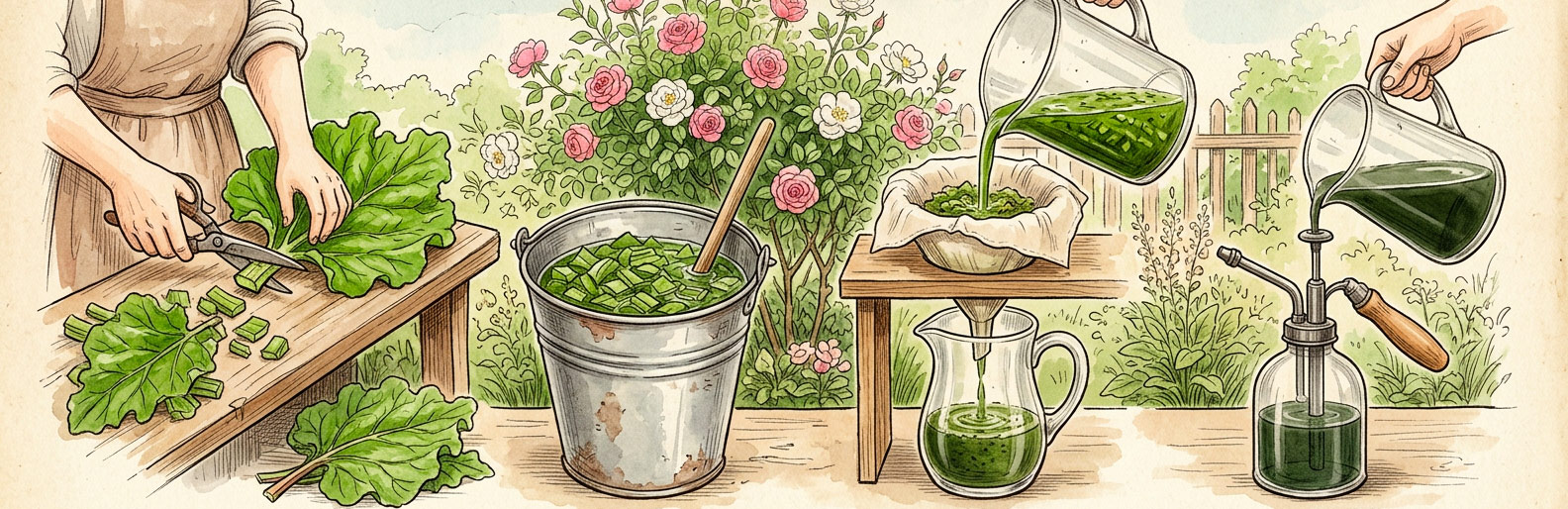
Chop the leaves
Roughly chop the rhubarb leaves and place them in the non-metallic bucket.
Submerge
Pour in the 10 liters of water and stir so the leaves are fully submerged.
Let it steep
Leave it to steep for about three days, in the shade. Stir once a day.
Strain
Once the brewing is done, strain the liquid carefully so it doesn't clog the spray bottle. The traditional recipe is roughly 1 to 1.5 kg of leaves per 10 liters of water, steeped for 72 hours.
How to use it on roses
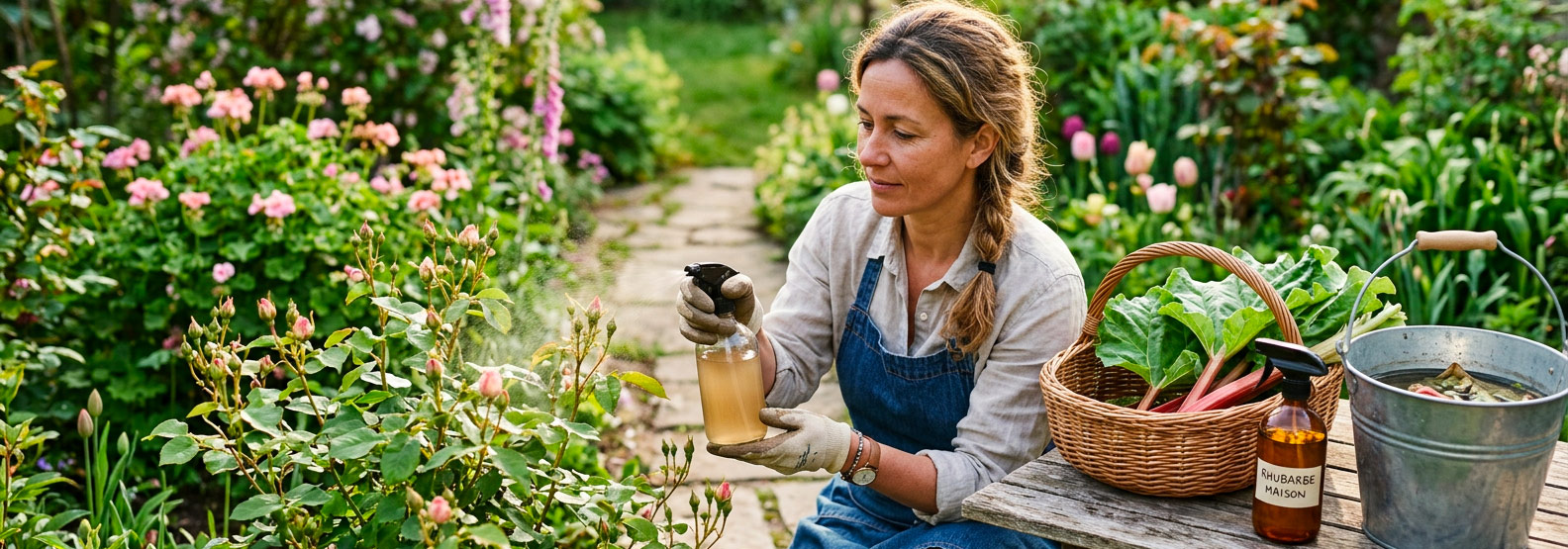
Pour the strained mixture into the spray bottle. Spray it directly onto young shoots, stems carrying aphids, the underside of leaves, and around still-closed buds. No need to soak the whole rose bush — it's better to target exactly where the aphids have gathered.
Spray preferably in the morning or evening, never under a blazing sun. Reapply a few days later if aphids are still present, or after heavy rain.
Before treating the whole plant
Even a natural recipe can occasionally be a bit much for young leaves. Start by spraying the mixture on a small part of the rose bush and wait a day or two before treating the whole plant. Also avoid spraying open flowers directly — that protects the bees, hoverflies, and other insects that come to feed there.
Don't aim to wipe out every last aphid
A few aphids generally aren't a threat to a mature rose bush. In fact, they attract their natural predators:
- ladybirds
- lacewings
- hoverflies
- small parasitic wasps
The rhubarb spray really earns its keep when aphids form dense clusters on young shoots or stop buds from developing properly. Before spraying, check whether ladybird larvae or other beneficial insects are already on the job — you might as well let them do the work.
Rhubarb leaves are still toxic
Rhubarb stalks are for cooking, the leaves are not. Wear gloves when handling them, and use a bucket, sieve, and spray bottle set aside exclusively for the garden. Don't brew this mixture in a cooking pot or with utensils you'll later use in the kitchen. Keep the finished spray out of reach of children and pets too, in a clearly labeled container.
Can you store the spray?
This homemade preparation works best when used promptly. Make only as much as you need, and keep it a few days in the fridge, in a closed, labeled container. If its smell or appearance changes noticeably, pour it onto the compost and brew a fresh batch.
A useful second life
Nothing goes to waste with this recipe: the stalks end up in a pie or jam, the leaves become a garden spray, and the strained residue joins the compost. A simple way to recycle what you'd otherwise throw out, while taking care of your roses.
"Next time you harvest your rhubarb, don't toss those big leaves — your roses might just thank you for them."
Quick recap
- Chop 1 to 1.5 kg of rhubarb leaves.
- Steep them in 10 liters of water for three days.
- Strain carefully.
- Spray onto aphid colonies.
- Reapply as needed, avoiding flowers and the hottest hours.