When edible flowers come up in conversation, many people immediately picture a fine dining plate decorated with a few colourful petals. Yet their use in cooking is far older and more practical than most people realise. For centuries they found their place in syrups, infusions, jams, vinegars, desserts and even savoury dishes.
Not all flowers are edible
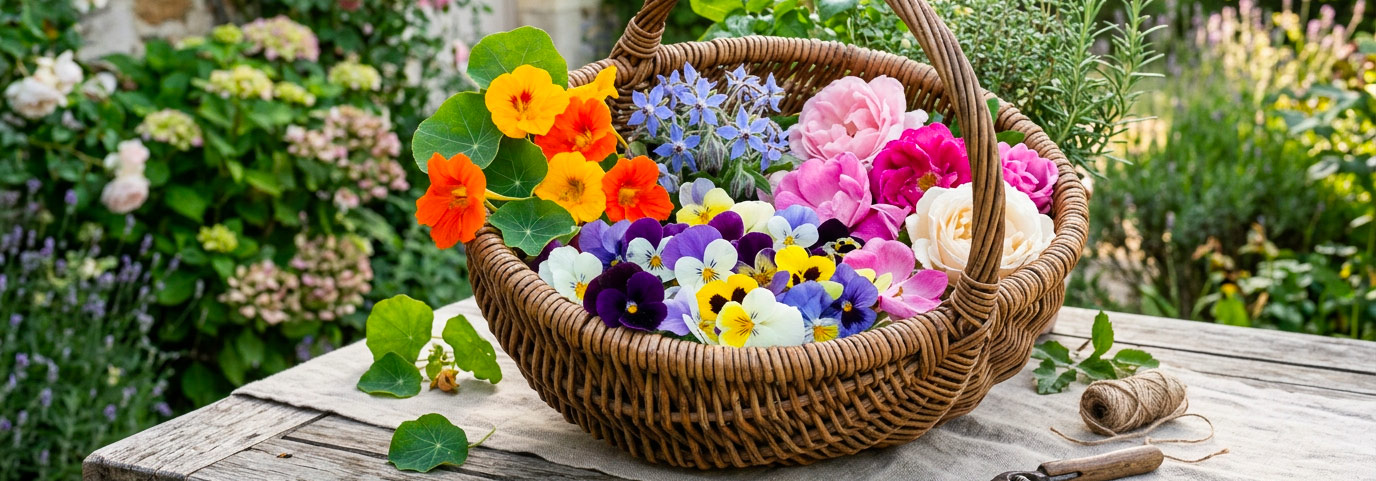
This is the first rule to know. Some flowers are perfectly safe to eat, others can be toxic. Correct identification before tasting is therefore essential. Among the easiest flowers to use from the garden:
- nasturtium
- borage
- pansy
- violet
- calendula
- rose
- chive flowers
- bergamot (monarda)
- lavender
These plants are often grown for both their beauty and their culinary uses.
Important
Never use flowers from florists or garden centres whose treatments you don't know. Flowers intended for consumption must be grown without pesticides or chemical fertilisers.
Some flowers have a real flavour
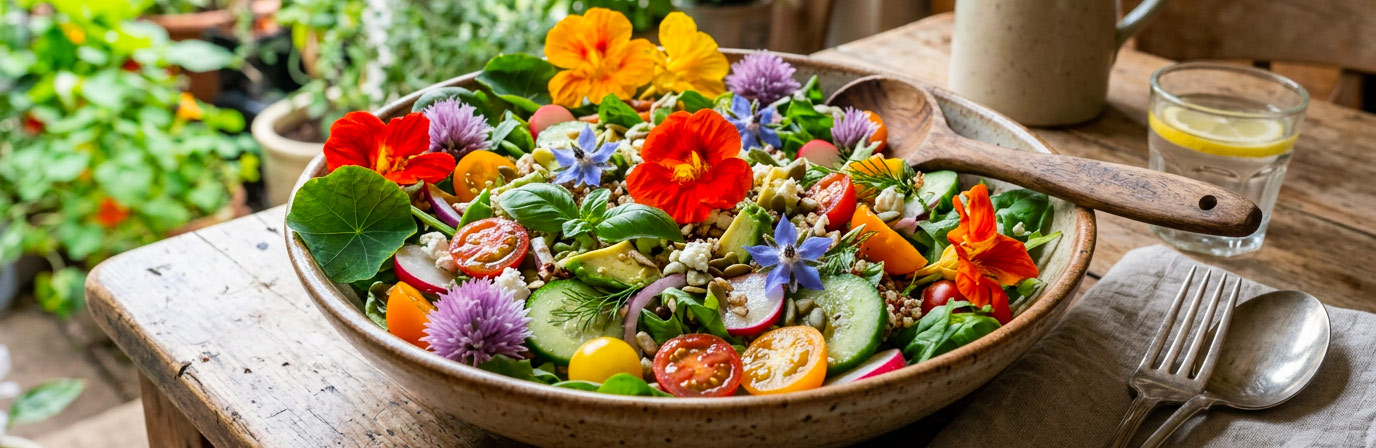
Flowers don't just add colour. Nasturtium has a peppery flavour reminiscent of watercress. Borage offers a fresh note slightly evocative of cucumber. Chive flowers taste of mild onion. Rose petals bring a delicate fragrance to desserts, syrups and jams. Each flower has its own character.
A place in savoury dishes
Edible flowers aren't only for desserts. A few nasturtium flowers can brighten a salad. Borage pairs well with summer vegetables. Chive flowers easily dress omelettes, potatoes or cream cheese sauces. Even a simple cheese board becomes more attractive with a few garden flowers.
Desserts, syrups and infusions
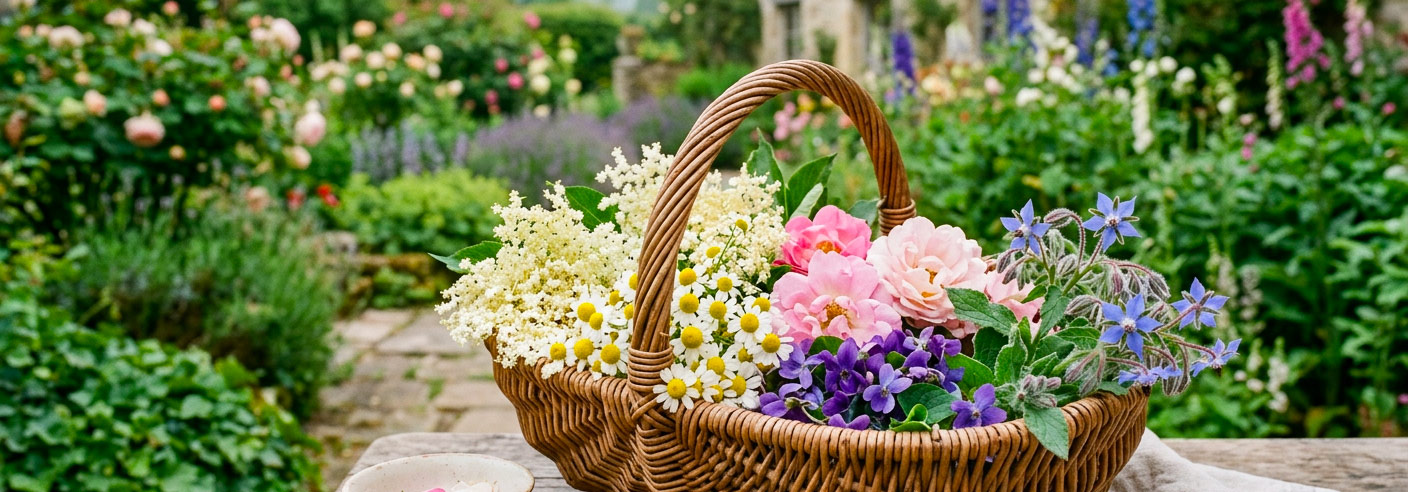
It's probably in sweet preparations that flowers are best known. Violets have long been used in confectionery. Roses flavour jellies and syrups. Lavender finds its place in certain biscuits, ice creams and flavoured honeys. Elderflower remains one of the most popular for homemade syrups.
Flowers also attract pollinators
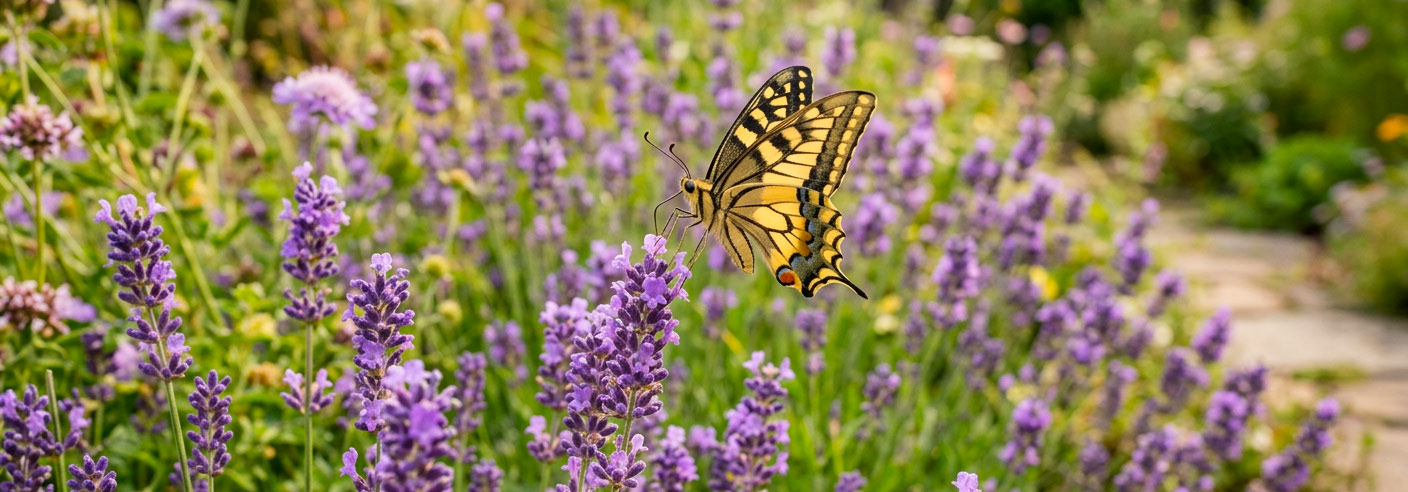
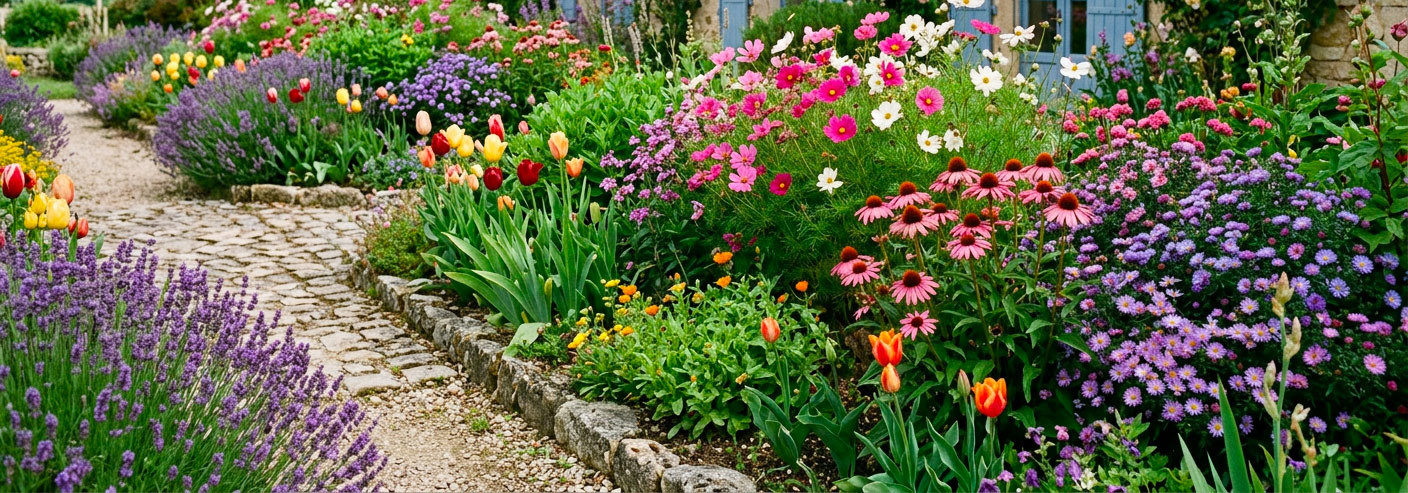
Growing edible flowers has another advantage: they attract bees, bumblebees and butterflies. Borage is particularly popular with pollinators. Nasturtium draws many useful insects. The garden becomes more lively while producing original harvests at the same time.
How to harvest flowers
Pick preferably in the morning, after the dew has evaporated. Choose fresh, recently opened, untreated flowers. Once picked, they generally keep for a short time and are best used quickly — the same day or the following day at the latest.
Start simply
A few nasturtium plants, some borage or pansies are enough to begin exploring this often-forgotten world. These plants are easy to grow, decorative and quickly open up new possibilities in the kitchen. A simple handful of garden flowers can turn a salad, a dessert or a homemade drink into something a little more original.