We all know the problem. Leftover roast, a few pieces of chicken, a bit of cold meat sitting in the fridge: too much to throw out, not quite enough for a proper meal. Today, we might turn it into a sandwich, a salad, or toss it with pasta. In the old days, people made a capilotade.
The principle is very simple: cut up the leftover meat, make a sauce with a small roux, wine, aromatics, and, if you have them, the roast bones for extra flavour. Then gently reheat the meat in that sauce. You don't need much. And above all, there's no need to cook the meat again until it turns to leather.
A recipe built for leftovers
In the old recipe I found, capilotade is described as a stew made from leftover roasted meats. You start by cutting the meat into evenly sized pieces. Then you prepare a small roux, thinned with white wine and water. Into it goes:
- the bones from the meat, if you have them
- thyme
- bay leaf
- parsley
- sliced onions
- pepper
- salt
The whole thing simmers for half an hour. The sauce is then strained and poured over the pieces of meat. The recipe specifies putting it back "over warm ashes, without boiling" — in other words, reheating gently.
Meat that's already cooked doesn't need to be cooked again for twenty minutes at a hard boil. It just needs to be warmed gently in a flavourful sauce. It's not fine dining, but you could almost believe it is.
Leftover Meat Capilotade
Leftover Meat Capilotade
Serves about 4
Ingredients
- 400 to 500 g (about 1 lb) leftover roast meat
- 1 onion
- 20 g (1.5 tbsp) butter
- 20 g (2 tbsp) flour
- 150 ml (5 fl oz) white wine
- 150 ml (5 fl oz) water
- 1 sprig of thyme
- 1 bay leaf
- A few sprigs of parsley
- Salt
- Pepper
- The bones (optional)
Method
- Cut the leftover meat into evenly sized pieces.
- Thinly slice the onion.
- Melt the butter in a saucepan, then add the flour.
- Stir for a moment to form a small roux, without letting it colour too much.
- Gradually pour in the white wine, then the water, stirring as you go.
- Add the onion, thyme, bay leaf, parsley, pepper and a little salt.
- If you still have the roast bones, add them too.
- Let simmer gently for about 30 minutes.
- Strain the sauce to remove the bones and aromatics.
- Place the pieces of meat in a saucepan.
- Pour the sauce over them.
- Reheat over very low heat, without boiling, until the meat is heated through.
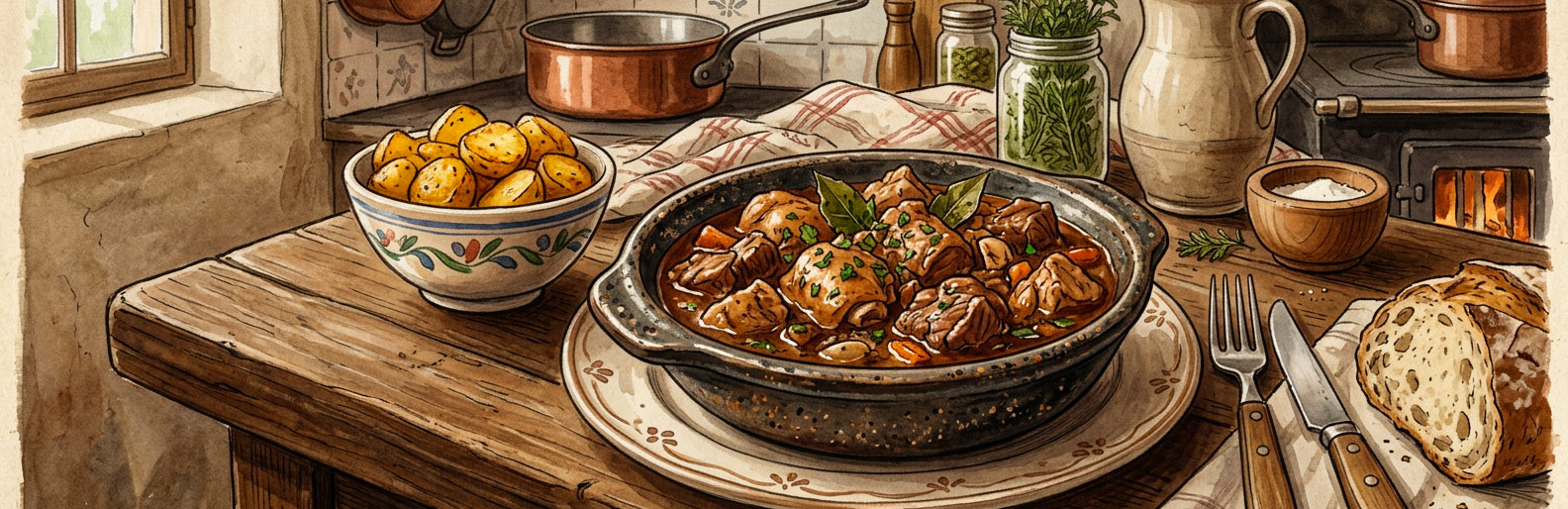
Why put the bones back in the sauce?
This is probably my favourite detail in this recipe. People in the old days didn't just make use of the meat: they also made use of what was left around it. The bones went back into the sauce while it cooked, to give it more flavour.
Today, we'd probably call it optimising leftovers, in the same spirit as making a soup out of radish tops. Back then, they just called it cooking. If you no longer have the bones, of course, the recipe still works perfectly well.
What about stronger-tasting meat?
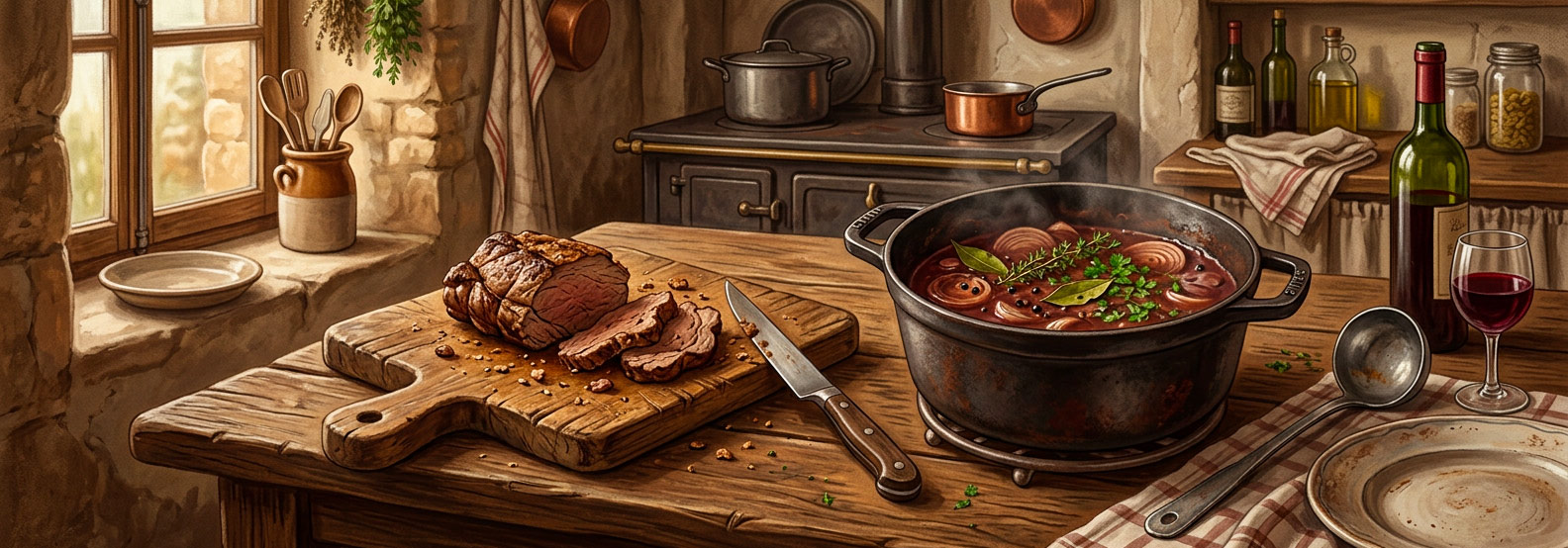
The old recipe includes a variation for what it calls "dark meats." In that case, the white wine is replaced with red wine, and a spoonful of olive oil is added to the sauce. It's a good option for leftover beef, duck, or game. For chicken, turkey, pork or veal, I'd stick with white wine.
What to serve capilotade with
The sauce calls for something simple alongside it. You can serve capilotade with:
- steamed potatoes
- mashed potatoes
- rice
- pasta
- toasted bread
- or a few vegetables
"Meat that's already cooked, plus a sauce, plus aromatics, plus a gentle reheat. That gives a much more interesting answer to the question: what do I do with this leftover roast?"
A recipe that really doesn't need updating
Good to know
What's interesting about capilotade is that it doesn't really need modernising. The principle still works perfectly: already-cooked meat, a sauce, aromatics, and a gentle reheat. Personally, given the choice between a forgotten piece of cold meat at the back of the fridge and a white-wine capilotade, the decision isn't a hard one.